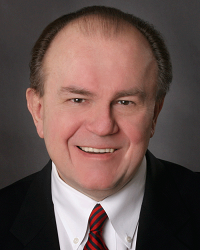
About Bud
My Story…
I was born a working class guy.
My grandparents on my mother’s side emigrated from Poland. That
grandfather worked in a factory in the town where I grew up near Pittsburgh.
My father’s parents were born in the USA but never went to school.
My grandmother started work as a domestic when she was 10. My
grandfather went to work in the coal mines of Central Pennsylvania when
he was eight.
My hometown was a company town called
Ambridge PA, so named because the American Bridge Division of US Steel
was headquartered there. My dad was an hourly worker for American
Bridge for almost 40 years. My mom worked as a checkout person
at a local supermarket and then as an office manager for a K Mart store.
Neither of my parents got anywhere
near a college, but education was a big thing in our house. All
I heard growing up was “go to college,” “go to college.”
I worked hard and got good grades in high school. I graduated
from Penn State in 1972. I did a year of service as a VISTA (Volunteers
In Service To America) Volunteer, and then began my career as a trainer
– working for the government training other people to become VISTA
Volunteers.
I knew that I didn’t want to spend
my career in government, so I went to school at night to get a Masters
Degree in– two years, working 5:30 – 10:30 for four nights a week.
I worked full time and went to school full time, graduating with a 4.0.
Then I got my first job in business.
It was in the training department of large Oil Company. I worked
hard, did a good job – and kept getting passed over for promotion.
The reasons were vague – “you’ve only been here a little while,”
“the hiring manager thought the other person was a better fit,”
“you need to polish up some of those rough edges.”
So I found another job, this time with
a Chemical Company. I worked hard, did a good job, got good performance
reviews – and no promotions. I was frustrated. In my heart
of hearts, I knew I was as good as or better than people who were moving
ahead while I was standing still.
I decided that maybe more school would
be the answer. I quit my job, and enrolled in a PhD program in
Adult Education and Organizational Behavior at Harvard. Once I
got there, though I realized that the same thing happens in academia
as happens in business. The hardest workers and best performers
don’t always get rewarded and promoted.
I decided that I had an opportunity
to use my situation as a lab. At Harvard, I was surrounded by
high performers – people who had achieved a lot at an early age, and
seemed destined to achieve even more. I decided that maybe I should
pay some attention to these folks.
I got one of those marble covered notebooks
and made a list of all the people I admired at Harvard, all of the people
in the companies where I had worked who got the promotions I didn’t,
and the people who had been role models to me in my life. I started
reading biographies of successful people – the list was varied, people
like George Washington, Thomas Jefferson, Benjamin Franklin, Martin
Luther King, Malcolm X, Gandhi, Nelson Mandela, Winston Churchill, etc.
etc. etc. I created a page for each person. I started writing
down the characteristics that I observed in these people. When
I was finished, I had a notebook full of the characteristics I observed
in successful people.
It was a long list. So I did
kind of a human regression analysis on it. I started looking for
patterns and groups of behaviors. When it was all said and done,
I found four distinct characteristics that the successful people I had
studied had in common.
They all:
- Had a clearly defined purpose
and direction for their lives. - Were committed to succeeding.
They faced obstacles and overcame them. - Were self confident.
They knew they were going to succeed and continue to succeed as they
went through life. - Shared some basic competencies.
- They knew how to present
themselves in a favorable light. Other people were attracted to
them and wanted to be around them. - They were high performers.
- They were great communicators.
- They were good at building
relationships.
- They knew how to present
Once I finished my degree, I took a
job with a very large pharmaceutical company in New York. I started
applying the lessons I learned from observing successful people — and
I began getting promotions and good assignments. I became the
confidant of several senior executives and I began coaching “up and
comers” in the company – teaching them the basic principles I had
discovered by writing my observations in that marble covered notebook.
I also kept refining my ideas – making
them easier for others to understand and apply. You never learn
something as well as when you teach it. I became the most sought
after internal coach in that company.
In 1988, I was faced with a decision.
Accept a big promotion to Vice President, or strike out on my own.
I decided that I have an entrepreneurial bent and chose the latter.
I opened up a small consulting, coaching and speaking business.
The idea was to reach an even greater number of people with what I knew
about creating a successful life and career.
For many years, I thrived as a corporate
consultant. Then I got cancer – and survived. I realized
that there was more to life than working as a high paid consultant.
I realized that I had an opportunity to reach even more people with
my common sense message about career and life success; people I would
never get a chance to meet, working one on one with executives in very
large companies.
That’s why I created my Career Success
GPS System. That’s why I’m making everything I know about
career and life success widely available. That’s why I wrote
this book. I want to help as many people as I can create the successful
lives and careers they want and deserve. I survived a cancer scare,
and now I want to give as much as I can, to as many people as I can.
The Career Success GPS system is based
on four simple but powerful common sense ideas.
- Clarity of purpose and direction
- Commitment to taking personal
responsibility for your life and career. - Unshakeable self confidence.
- And a set of specific competencies
you must master in order to succeed.
These four Cs – clarity, commitment,
confidence and competency have guided me on my success journey, and
I’m sharing them with you so they can guide you on your personal journey
to the career and life success you want and deserve. Let’s look
at them in a little more detail.
There are three keys to developing
your clarity of purpose and direction. You have to…
- Define what success means
to you personally. - Create a vivid mental picture
of yourself as a success. - Clarify your personal values.
There are three keys to committing
to your success. You have to…
- Take personal responsibility
for your success. - Set high goals – and do
whatever it takes to achieve them. - Choose to respond positively
to people and events.
There are three keys to becoming self
confident. You have to …
- Choose optimism. Believe
in your heart of hearts that today will be better than yesterday and
that tomorrow will be better than today. - Face your fears and act.
Don’t let your fears paralyze you into inaction. Self confident
people act. - Surround yourself with positive
people. Jettison the nay sayers in your life.
Finally, there are four key success
competencies you must develop. You have to…
- Learn how to create positive
personal impact. - Learn how to become an outstanding
performer. - Learn how to become a dynamic
communicator – in conversation, writing and presenting. - Learn how to build strong
relationships with the important people in your life.
I know this sounds like a tall order
when you see and hear it like this. These ideas can be a bit overwhelming.
That’s why I’ve written this book. It will help you take it
slowly – one step at a time. The ideas in this book build on
one another. By the time you’ve finished reading, you will not
only know exactly what you need to do to succeed. You’ll be
well on your way to unstoppable success.
Section 1: Clarity of Purpose and Direction
George Bernard Shaw is my favorite
playwright. I always enjoy attending a production of one of his
plays. He was a hard worker – someone who was truly committed
to his craft. He makes a great point about how important a personal
clarity of purpose and direction is to your career and life success.
- “This is the
true joy in life; being used for a purpose recognized by yourself as
a mighty one; being a force of nature instead of a feverish, selfish
little clod of ailments and grievances complaining that the world will
not devote itself to making you happy.”
He’s talking about
two things here: accomplishing a lot – being a “force of nature,”
and more importantly, having a mighty purpose to direct that force. Clarity of purpose and direction is one of
the four keys to career success in my Career Success GPS System.
You can develop your clarity of purpose by doing three things.
First, define what success means to you personally. Second, create
a vivid mental image of you as a success. This image should be
as vivid as you can you make it. Third, clarify your personal
values.
Your clarity of purpose and direction
provides your foundation. From it, you can build the successful
life and career that you want and deserve. The more clear, and
the more mighty your purpose and direction, the stronger your foundation.
I’m a sixties guy. After all
these years, my favorite recording artist is still Bob Dylan.
My favorite Dylan song – and maybe my favorite song ever — is “Forever
Young.” He rerecorded and rereleased it recently. Pepsi
has picked it up and is using it in its ads that run on NFL games.
I used one of the lines from it to introduce my bestselling book
Straight Talk for Success – “May you build a ladder to the stars
and climb on every rung.”
Check out some of the other lyrics…
“May your hands always be busy.
May your feet always be swift.
May have a strong foundation
When the winds of changes shift.”
By now you may be saying,
“Get to the point, Bud.” So I will. You should begin
your success journey by clarifying your purpose in life. Why are
you on this earth? What are you meant to do? I believe that
the more mighty this purpose, the more you are likely to succeed.
A mighty purpose gives you that strong foundation “when the winds
of changes shift.”
As a career success
coach, I’m here to help other people succeed in realizing their purpose.
I think this is a pretty mighty purpose. I may help someone who
someday may become President, or a Supreme Court Justice, or find a
cure for cancer, or just be a loving and caring parent. This purpose
anchors me. It keeps me going when I get frustrated, or when I
feel like quitting, or when I start to feel that it’s OK to be “good
enough,” not great.
The other day, I was having a conversation
with one of my career success coaching clients. We were talking
about my Career Success GPS model; specifically we were discussing clarity
of purpose and direction. She said that she read a blog post on
clarity of purpose and direction that I wrote and got confused by all
of the different words that came up when she thought about clarity –
words like purpose, direction, mission and vision.
This got me thinking. If she
gets confused about the semantics of clarity of purpose and direction,
I bet others do too. Below, I have defined these terms for you
in a manner that will help you create your personal clarity of purpose
and direction.
As I begin, please note that these
are the working definitions that I use with my Career Success GPS model.
You may have seen other definitions for these terms. I am presenting
these definitions here to help you better understand how I use them
in my model – not as the “correct” definition of these terms.
For our purposes here, I define the
word “mission” as follows…
- Your reason
for existing. - Your passion.
- Why you are on this
earth.
This isn’t always easy to discover.
If you’re young and still trying
to figure out your mission, don’t worry. It takes time.
That’s why I always tell people to be open to new ideas and thoughts,
as you never know what you might pick up.
If you told me when I was in high school
that my mission would helping others succeed, I would have laughed.
It took several courses in college and a year of service as a VISTA
Volunteer for me to figure it out. That’s when I began my career
in the human development field.
Your mission needs to come from deep
inside you. It is unlikely to change over the long run.
I’ve had lots of different jobs in lots of companies and have been
self employed for over 20 years. Through all the changes, one
thing has remained constant – my desire and passion for helping others
succeed. In my heart of hearts, I know that I am on this earth
to help others navigate the ambiguities of life in order to reach their
goals.
Here is my mission…
- To help others achieve the career
and life success that they want and deserve by applying their common
sense.
It hasn’t changed since I was 23
years old. This mission reflects who I am and why I get up every
morning. It’s what’s right for me.
What’s right for you? What
is your passion? What is your reason for living? Why you
are on this earth?
Think of your vision as…
- Where are you going?
- What will you achieve in
the next 1, 5, 10, 20 years.
Unlike your mission, your vision will
change over the course of your life and career. Early in my career
I was working for the government training other people to be VISTA Volunteers;
my three year vision was to get a Masters Degree at night and to parlay
that into a training and development job in business. Notice that
this vision fit into my mission of helping others succeed in their lives
and careers, but it had a specific short term time frame.
When I was in my 30’s my vision shifted.
It became “to create a successful one person coaching, consulting
and speaking business.” Your vision needs to be consistent with your
mission. However, unlike your mission, your vision should change
as you grow and develop in your career.
Finally, your vision should always
be a BHAG – a big hairy audacious goal. I first saw this term
in Jim Collins and Jerry Porras’ great book Built to Last.
You need to create a vision that will challenge you and motivate you
– it should be big and hairy and audacious. What’s a big hairy
audacious goal for your next year? Five years? Ten years?
My current vision comes in a one year
and a five year time frame.
- Create a profitable internet business
that will allow me to share my optimistic message on career and life
success and help as many people as I can.
- Make 100% of my income from the
internet five years from now.
Notice how my one year vision is consistent
with my mission of helping others succeed in their lives and careers.
It’s also a BHAG – for me at least. While I have amassed knowledge
about career and life success over a lifetime of work and study, turning
that knowledge into information products that I can sell over the internet
is something completely new for me. I’m learning about internet
marketing as I go. With a little luck and a lot of persistence,
I am confident that this will be a breakout year for me as an internet
marketer.
I’m also confident that in five years;
I’ll be doing almost all of my business on the internet. I’ll
be traveling for business only when I choose to do so. This will
be a radical departure from the 45 to 50 weeks of business travel that
I’ve done for so many years.
So where does all this leave us when
it comes to thinking about clarity of purpose and direction? Here’s
how I suggest you think about it.
Your purpose is your mission – your
reason for living, your passion, what you are on this earth to do; something
that is unlikely to change over the long run.
Your direction is your vision – short
and medium term goals that define the direction you will take your life
and career.
There is a common sense point here.
Successful people define clarity of purpose and direction for their
lives and careers. Your clarity of purpose and direction should
include both a personal mission (your purpose) and a personal vision
(your direction). Your mission is your reason for living, why
you are on this earth. It is unlikely to change over the long
run. Your vision is a short or medium term goal that defines the
direction you will take over the next three to five years. It
will change are you grow and develop in your life and career.
Your vision must be consistent with your mission.
Brad Swift of the Life On Purpose Institute
(www.lifeonpurpose.com), makes a great point about clarity of purpose…
- “Taking a bold stand for living
on purpose starts by knowing your purpose with crystal clarity — knowing
it so well that if someone woke you up at 3:00 in the morning and asked
you what your life purpose is, you’d be able to tell them. And
if someone who knew you well heard what you said, they’d realize that
your life was a true, authentic reflection of that purpose.”
There are two common sense points on
which I want to focus here. First, your clarity of purpose has
to be deeply ingrained in your psyche. It has to be part of who
you are. Second, you have to live your clarity of purpose 24/7/365.
This takes commitment; commitment to determining your life’s purpose,
and commitment to living it.
Several years ago I decided that my
life’s purpose is to help others create the successful lives and careers
that they want and deserve. I realized that I take immense satisfaction
out of seeing others learn, grow and succeed. In another life
I might have been a teacher or athletic coach. In this life, I
help people succeed in business.
If you were to wake me at 3:00 in the
morning, shine a light in my face and ask me for my life’s purpose,
I’m sure I would say, “Helping people create successful lives and
careers.” It’s that much a part of me. My elevator speech
begins, “Hi, I’m Bud Bilanich, the Common Sense Guy; I help people
create successful lives and careers by applying their common sense.”
What is your purpose in life?
Is it deeply ingrained in you? Have you even thought about it?
Clarity of purpose and direction comes
first in the Career Success GPS model. As I’ve mentioned above,
my purpose is to help other people create successful lives and careers
by applying their common sense. That has been a constant with
me through my entire working life. My direction has changed over
the years. Recently, it has changed dramatically. My vision
for the next five years is to build an internet based coaching and career
development business. That’s where I’m going. It’s
why I write a blog and publish my ezine. It’s why I’ve begun
sending my subscribers daily “Think, Act, Succeed” quotes.
It’s why I’ve begun podcasting. You can check out my new podcast
at http://CareerSuccess.mypodcast.com. It’s why I created the Career Success
GPS system.
Your direction defines what you do
every day. It should reinforce your life purpose. Clarifying
not only your purpose but your direction helps get you to the second
of Brad Swift’s points; “If someone who knew you well heard what
you said (about your life’s purpose), they’d realize that your life
was a true and an authentic reflection of that purpose.” That’s
why I think that while clarity of purpose is important, clarity of direction
is equally so.
Clarity of direction helps you determine
what you are going to do every minute, every hour, every day.
If your direction is congruent with your purpose others will notice.
More important, you will be living your purpose and creating the successful
life and career you deserve.
Successful people clarify their purpose
and direction in life. They have a clear understanding of what
success means to them and a vivid mental image of themselves as a success.
Everything they do is consistent with their clarity of purpose.
Their day to day actions all help move them closer to their vision of
success, and are consistent with their clarity of purpose. When
you clarify your purpose and live it, you will hardly ever procrastinate
or find yourself going off on tangents. You’ll be laser focused
on living the life that is important to you. What’s your clarity
of purpose? Are you living it?
Dr. Martin Luther King is one
of my personal heroes. He helped lead our nation out of the dehumanizing
segregation policies that flourished in the post civil war period.
More than any other single person, I believe he was responsible for
the passage of the Civil Rights Act of 1964. Today a black man
is president of the USA United States. This would have been unthinkable
on August 28, 1963, the day Dr. King delivered his famous speech “I
Have a Dream”.
I bring up Dr. King and the “I Have
a Dream” speech because it is the embodiment of clarity of purpose
and direction. Read the words below and see how they so clearly
describe Dr. King’s vision of success, for himself and the nation;
and how they present a vivid depiction of what success meant to him.
- “And so even though we face the
difficulties of today and tomorrow, I still have a dream. It is a dream
deeply rooted in the American dream.
- “I have a dream that one day
this nation will rise up and live out the true meaning of its creed:
‘We hold these truths to be self-evident, that all men are created
equal.’
- “I have a dream that one day
on the red hills of Georgia, the sons of former slaves and the sons
of former slave owners will be able to sit down together at the table
of brotherhood.
- “I have a dream that one day
even the state of Mississippi, a state sweltering with the heat of injustice,
sweltering with the heat of oppression, will be transformed into an
oasis of freedom and justice.
- “I have a dream that my four
little children will one day live in a nation where they will not be
judged by the color of their skin but by the content of their character.
- “I have a dream today!
- “I have a dream that one day,
down in Alabama, with its vicious racists, with its governor having
his lips dripping with the words of “interposition” and “nullification”
– one day right there in Alabama, little black boys and black girls
will be able to join hands with little white boys and white girls as
sisters and brothers.
- “I have a dream today!
- “I have a dream that one day
every valley shall be exalted, and every hill and mountain shall be
made low, the rough places will be made plain, and the crooked places
will be made straight; and the glory of the Lord
shall be revealed and all flesh
shall see it together’.”
Those are powerful words. Can
you see how they demonstrate Dr. King’s clarity of purpose and direction?
He carried on his work well after the Civil Rights Act of 1964 became
law, because he knew that legislation alone does not bring out societal
change.
What is your dream? Can you articulate
it clearly and vividly as Dr. King?
Dr. King also lived his personal values.
One of his quotes is sadly prophetic. “A man who won’t die for
something is not fit to live.”
Dr. King was gunned down and Killed
on April 4, 1968 in Memphis, TN by James Earl Ray. His legacy
and message are celebrated today more than 40 years after his death.
There is a common sense point in this
discussion of Dr. Kings “I Have a Dream” speech. Successful
people are clear about their purpose and direction in life. Few
people have demonstrated such a clear sense of purpose and direction
for their lives as Dr. Martin Luther King. His famous “I Have
a Dream” speech is one of the best examples of a clear, vivid description
of not only personal success, but success for us as a society.
“I have a dream… that little black boys and black girls will be
able to join hands with little white boys and white girls as sisters
and brothers.” The dream is alive – although we still need
to keep working on it.

